Bunion Surgery Explained: Pain, Recovery, and Real Outcomes
February 2, 2026

Living with a bunion can make everyday activities uncomfortable, from walking to finding shoes that fit properly. As symptoms worsen, many patients begin evaluating is bunion surgery worth it based on pain levels, mobility, and daily function. Surgery is not the first step for most people, but when conservative treatments fail, it can be an effective solution for long-term pain relief and improved mobility.
This article outlines key considerations for bunion surgery, including pain, recovery time, and expectations three weeks after the procedure. Understanding these factors can help you decide if surgery is the right option for you.
What Is Bunion Surgery and Why Is It Recommended?
A bunion, also known as hallux valgus, occurs when the big toe joint shifts out of alignment, creating a bony prominence and joint inflammation. Over time, bunions often worsen, leading to chronic pain, stiffness, and difficulty walking.
Bunion surgery is recommended when non-surgical treatments, such as orthotics, footwear changes, padding, or anti-inflammatory care, no longer provide relief. The purpose of surgery is not cosmetic. Instead, it aims to correct the underlying structural issue, reduce pain, and restore proper foot function.
Learn more about bunions, how they progress, and available treatment options in this related article.
Is Bunion Surgery Worth It?
Whether bunion surgery is worth it depends on the severity of symptoms and how much the condition affects daily life.
When Bunion Surgery Is Worth It
Surgery is often worth considering when:
- Bunion pain is persistent or worsening
- Walking or standing is difficult
- Daily activities or work are limited
- Conservative treatments no longer help
- The deformity continues to progress
In these situations, surgery can significantly improve comfort, mobility, and quality of life.
When Surgery May Not Be Necessary
Patients with mild bunions that cause minimal pain may not need surgery. When symptoms are well controlled with non-surgical care, ongoing monitoring under the guidance of a foot and ankle specialist may be sufficient. Recovery time and temporary activity limitations should also be carefully considered before making a treatment decision.
Is Bunion Surgery Painful?
Some discomfort is expected during the recovery process, but bunion surgery is generally well tolerated. The procedure itself is performed using anesthesia, so patients do not feel pain during surgery. Afterward, pain and swelling are normal, particularly during the first few days, and are typically managed with medication, elevation, icing, and activity modification.
As healing progresses, discomfort steadily improves. Most patients report that post-surgical pain is temporary and significantly less limiting than the chronic pain experienced before surgery. Following post-operative instructions closely plays an important role in keeping pain controlled and supporting a smooth recovery.
How Long Does It Take to Recover From Bunion Surgery?
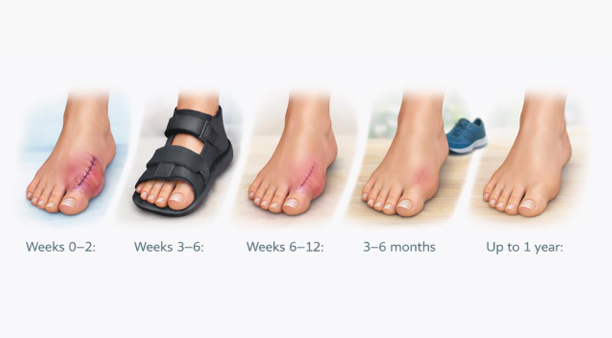
How long to recover from bunion surgery depends on the procedure performed and individual healing, though most patients follow a similar progression:
- Weeks 0–2: Swelling and tenderness are common. Walking is limited, and a surgical shoe or boot is usually required.
- Weeks 3–6: Gradual increase in weight-bearing with continued protection. Swelling is still expected.
- Weeks 6–12: Transition into supportive regular shoes and light daily activities.
- 3–6 months: Continued improvement in strength, flexibility, and comfort.
- Up to 1 year: Final healing and resolution of residual swelling.
Swelling that lasts several months is normal and does not mean the surgery was unsuccessful.
What to Expect 3 Weeks After Bunion Surgery
This stage marks an important early phase in recovery, when initial improvements begin to appear. At three weeks post-surgery, most patients:
- Experience noticeably less pain than during the first week
- Still have swelling, especially later in the day
- Are walking in a surgical boot or following guided weight-bearing instructions
- Are not yet cleared for high-impact or strenuous activities
While improvement is visible, healing is still ongoing, and following post-operative guidelines remains essential.
Outcomes, Risks, and Recovery Considerations
Bunion surgery is highly effective for improving pain and function when appropriately recommended and guided by a specialist. While outcomes are generally favorable, results depend on factors such as the severity of the deformity, surgical technique, and adherence to post-operative care. Understanding these considerations helps patients set realistic expectations and supports better long-term results.

Making an Informed Decision
Deciding is bunion surgery worth it requires a personalized evaluation. X-rays, physical examination, and a discussion of lifestyle needs all play an important role in determining the most appropriate treatment approach and long-term foot health.
If bunion pain is interfering with your comfort or mobility, Foot & Ankle Specialists of New Mexico provides professional evaluation to help clarify your treatment options for patients across New Mexico. Book an appointment today for expert foot and ankle care.
Schedule an Appointment Today!
If any of these signs or symptoms sound familiar to you, don't wait! Schedule an appointment with one of our specialists TODAY and get back to living your best life! For more tips, tricks, and helpful information, be sure to check out our social media accounts!