What Causes Bunions? Why They Form and How to Prevent Them
December 26, 2025

Bunions are one of the most common foot conditions podiatrists treat, yet many people don’t fully understand why they develop or how to slow their progression. While bunions often start as a mild bump near the big toe, they can gradually become painful, limit footwear options, and affect overall foot alignment if left unaddressed.
This article explains what causes bunions, how they form over time, who is most at risk, and what steps you can take to prevent bunions or keep existing ones from getting worse.
What Is a Bunion?
A bunion (medically called hallux valgus) is a bony prominence that forms at the base of the big toe. It develops when the big toe gradually shifts inward toward the second toe, forcing the joint at the base of the toe to stick outward.
Over time, this misalignment can cause inflammation, pain, stiffness, and difficulty wearing certain shoes. Understanding why bunions form is key to preventing long-term discomfort.
What Causes Bunions to Develop?
There isn’t a single cause behind bunions. Instead, they usually develop due to a combination of structural, genetic, and lifestyle factors.
1. Genetics and Foot Structure
One of the most important answers to what causes bunions lies in inherited foot mechanics. Many people are born with foot structures that place extra stress on the big toe joint, such as:
- Flat feet
- Low arches
- Loose ligaments
- Abnormal bone alignment
This is why many patients ask, are bunions hereditary? In many cases, yes. While bunions themselves aren’t directly inherited, the foot structure that leads to them often is.
2. How Do Bunions Form Over Time?
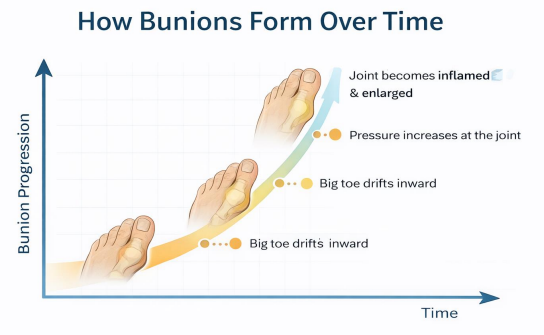
Rather than appearing suddenly, bunions develop gradually. How do bunions form typically follows this pattern:
- The big toe begins to drift inward
- Pressure increases at the joint
- The joint becomes inflamed and enlarged
- Misalignment worsens over time
This progression explains why bunions form slowly and why early intervention is so important.
3. Footwear Choices
Shoes don’t usually cause bunions on their own, but they can accelerate their progression. Tight, narrow, or pointed-toe shoes force the toes into unnatural positions, increasing pressure on the big toe joint. High heels also shift body weight forward, adding stress to the forefoot.
For people with a genetic predisposition, improper footwear can significantly worsen bunion development.
4. Repetitive Stress and Lifestyle Factors
Activities that place repeated stress on the feet, such as standing for long periods, certain sports, or occupations that require restrictive footwear, can contribute to joint strain.Over time, this stress can aggravate misalignment and inflammation around the big toe.
Who Is Most at Risk for Bunions?
Some people are more likely to develop bunions than others. Risk factors include:
- Family history of bunions
- Flat feet or abnormal foot mechanics
- Wearing tight or narrow shoes regularly
- Occupations requiring long hours on your feet
- Certain inflammatory conditions, such as arthritis
Being aware of these factors can help you take preventive steps early.
How to Prevent Bunions
While not all bunions can be prevented, especially when genetics play a role, there are effective ways to reduce your risk.
If you’re wondering how to prevent bunions, consider the following:
- Wear shoes with a wide toe box
- Avoid high heels or limit how often you wear them
- Choose supportive footwear that matches your foot type
- Maintain a healthy weight to reduce joint stress
- Address foot alignment issues early with professional guidance
How to Prevent Bunions From Getting Worse
If a bunion has already formed, taking action early can help slow progression and reduce symptoms. Learning how to prevent bunions from getting worse often includes:
- Switching to properly fitted shoes
- Using orthotics or supportive inserts when recommended
- Avoiding prolonged pressure on the forefoot
- Managing inflammation with rest and activity modification
- Monitoring changes in pain, swelling, or toe alignment
Early care can help preserve joint function and delay the need for more advanced treatment.
When to See a Podiatrist for Bunions
If a bunion becomes painful, limits your footwear choices, or interferes with daily activity, a podiatrist can evaluate the severity and recommend appropriate treatment options.
Professional care focuses on relieving symptoms, slowing progression, and protecting long-term foot health. To learn more, visit our bunions services page.

Take the Next Step Toward Healthier Feet
Bunions don’t have to control your comfort or mobility. Understanding what causes bunions and addressing them early can make a meaningful difference in how your feet feel over time.
If you’re experiencing bunion pain or noticing changes in toe alignment, book an appointment today with Foot & Ankle Specialists of New Mexico to receive personalized care and expert guidance.
Schedule an Appointment Today!
If any of these signs or symptoms sound familiar to you, don’t wait! Schedule an appointment with one of our specialists TODAY and get back to living your best life! For more tips, tricks, and helpful information, be sure to check out our social media accounts!