Toenail Not Growing? Causes and When to Be Concerned
April 6, 2026
Toenail Not Growing? Causes and When to Be Concerned
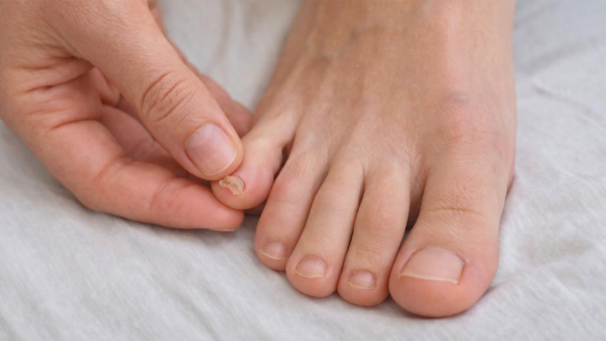
Noticing a toenail not growing can feel unusual, especially when other nails continue to change over time. While toenails naturally grow more slowly than fingernails, they should still show steady progress. When growth appears stalled, uneven, or completely unchanged, it may signal an underlying issue affecting the nail.
In some cases, only one nail is affected, while in others, multiple toenails may be involved. Understanding what may be causing this change is important, particularly if it is accompanied by discoloration, thickening, or discomfort.
How Fast Should a Toenail Grow?
Toenails grow slowly compared to fingernails, typically at a rate of about 1–2 millimeters per month. Because of this, it may sometimes seem like a toenail stopped growing when it is simply growing at a slower pace.
However, over time, you should still notice gradual changes in length or appearance. If a nail looks the same for several months, it may indicate that growth has slowed more than expected or stopped altogether.
What Does It Mean When a Toenail Is Not Growing?
When a toenail is not growing, the issue often lies in the nail matrix, the area beneath the skin that produces the nail. If this area becomes disrupted, growth may slow, become irregular, or stop entirely.
This is why questions like why my toenail is not growing or why doesn't my toenail grow often point to an underlying issue rather than a single condition. Identifying the cause is key to determining whether the change is temporary or requires treatment.
Common Causes of a Toenail Not Growing
Previous Injury or Trauma
Injury is one of the most common reasons for changes in nail growth. Dropping something on the toe, repetitive pressure from shoes, or sports-related stress can affect the nail matrix. This may explain situations such as why my big toenail has stopped growing, especially if there was prior impact or irritation.
Fungal Nail Infection
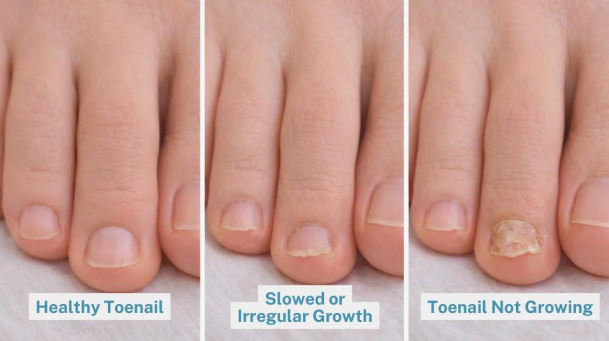
Fungal infections can interfere with normal nail development. Affected nails may appear thickened, brittle, discolored, or distorted. In some cases, the nail may look unchanged over time, leading to the impression of a toenail stopped growing.
Nail Matrix Damage
Damage to the nail matrix can significantly affect how the nail grows. Depending on the severity, growth may become uneven or stop altogether, resulting in a toenail not growing normally.
Poor Circulation
Healthy nail growth depends on proper blood flow. Reduced circulation can limit the nutrients reaching the nail, slowing growth. This may be one reason behind concerns like why my toenails don't grow, particularly in older adults or those with vascular conditions.
Aging and Natural Changes
As part of the natural aging process, nail growth tends to slow. Toenails may become thicker, more brittle, and take longer to grow, which can make changes more noticeable.
Repetitive Pressure or Footwear
Wearing tight shoes or placing repeated stress on the toes can affect nail growth over time. This may lead to cases where only one toenail stopped growing, especially if pressure is concentrated in a specific area.
Underlying Health Conditions
Certain medical conditions, including diabetes, thyroid disorders, and nutritional deficiencies, can affect nail health. These conditions may disrupt normal growth patterns and lead to ongoing changes in the nails.
Signs Your Toenail May Not Be Growing Normally
It can be difficult to tell whether a nail is simply growing slowly or not at all. Some signs that may indicate abnormal growth include:
- No visible change in length over several months
- A nail that looks unchanged while others continue to grow
- Thickening, ridging, or distortion
- Discoloration such as yellowing or darkening
- Nail lifting or separation from the nail bed
These changes may suggest that something is interfering with normal nail development.
How a Podiatrist Evaluates a Toenail That Won't Grow
A podiatrist will begin with a careful examination of the nail and surrounding skin, assessing its structure, thickness, and appearance. Your medical history, including any injuries or underlying conditions, will also be considered.
If needed, additional testing may be recommended to identify issues such as fungal infection or circulation concerns. This helps guide the most appropriate treatment approach.
Treatment Depends on the Cause
Treatment for a toenail not growing depends on the underlying condition. In many cases, conservative care such as proper nail trimming, footwear adjustments, or monitoring may help support healthier growth.
When infection, structural issues, or medical conditions are involved, more targeted treatment may be needed. Because each case is different, an accurate diagnosis is essential for effective care.
When to See a Podiatrist
While toenails grow slowly, a toenail not growing over time may indicate an underlying issue that should be evaluated. If changes persist or worsen, it may be time to see a podiatrist, especially if you notice:
- No visible growth over several months
- Thickening, discoloration, or changes in nail shape
- Pain, tenderness, or nail lifting
- A history of injury with no improvement
- Changes affecting only one toenail
- Underlying conditions such as diabetes or circulation issues
Early evaluation can help identify the cause and prevent further complications.
Don't Ignore a Toenail That Isn't Growing
A toenail that appears unchanged over time may seem minor, but it can be a sign of an underlying issue. Identifying the cause early can help prevent complications and improve long-term nail health.
If you are experiencing ongoing concerns, Foot & Ankle Specialists of New Mexico provides comprehensive care for patients throughout New Mexico. You can explore our clinic locations or schedule an appointment to receive a thorough evaluation and personalized treatment plan.
Schedule an Appointment Today!
If any of these signs or symptoms sound familiar to you, don't wait! Schedule an appointment with one of our specialists TODAY and get back to living your best life! For more tips, tricks, and helpful information, be sure to check out our social media accounts!